Friday, June 10, 2011
The Dream-Web Diary of Gwenevere Stoker by Laura Stoddard
5 Stars
Gwenevere Stoker is a lonely young girl, haunted by an accident that changed her life two years before. Every night she escapes into her dreams, grateful for the break from her miserable reality. Until she discovers that someone is infiltrating her Dream-Web (the place where all her dreams reside) and stealing her Dream Orbs. She must find out who is wreaking havoc on her dreams, while learning to face her past.
This was an interesting read. The author is very imaginative, and her descriptions of the dreams have just the right balance of reality and bizarreness that they feel very much like real dreams. However, I found the book a little too graphic for younger readers (Gwen is supposed to be 12, so I assume the book is geared to that age-group; I think it would be too much for anyone younger than that), and not well-written enough to appeal to a much older audience. I also found it somewhat heavy-handed in the handling of some of the more mature themes, and was a little put off by the apparently unconsidered ramifications of the actions of a couple of characters. If you are interested in dreams as a topic, you will find it an intriguing read, but I wouldn't otherwise recommend it.
Tuesday, May 17, 2011
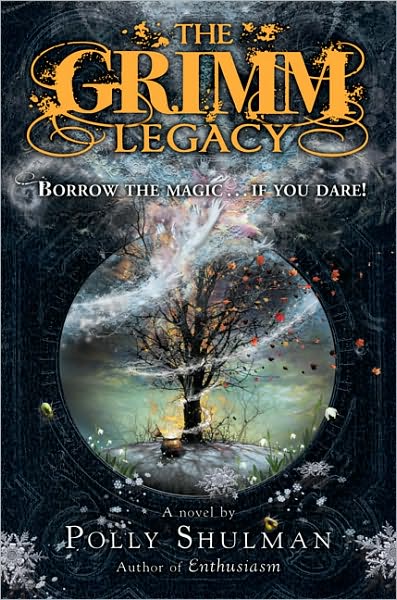
The Grimm Legacy by Polly Shulman
5 Stars
Summary: "Elizabeth has a new job at an unusual library— a lending library of objects, not books. In a secret room in the basement lies the Grimm Collection. That's where the librarians lock away powerful items straight out of the Brothers Grimm fairy tales: seven-league boots, a table that produces a feast at the blink of an eye, Snow White's stepmother's sinister mirror that talks in riddles.
When the magical objects start to disappear, Elizabeth embarks on a dangerous quest to catch the thief before she can be accused of the crime—or captured by the thief." (taken from GoodReads)
Review: I liked this book well enough. I thought the premise was intriguing (who doesn't want to visit a library full of objects instead of books?!) but I wasn't really able to connect with the characters. It had potential but kind of fizzled out a bit. However, it kept me interested enough to finish it so it was worth one read I suppose.
Monday, February 14, 2011
The Actor and the Housewife by Shannon Hale
6 Stars (-1 for VERY mild language, and suggestive material)
"Mormon housewife Becky Jack is seven months pregnant with her fourth child when she meets celebrity heartthrob Felix Callahan. A few hours, one elevator ride, and one alcohol-free dinner later something has happened, though nothing has happened...It isn't sexual. It isn't even quite love. But soon Felix shows up in Salt Lake City to visit and before they know what's hit them, Felix and Becky are best friends... Becky's loving and devoted husband, Mike, is mostly unconcerned. Her children roll their eyes. Her large extended family and neighbors gossip endlessly. But Felix and Becky have something special, something unusual, something that seems...completely impossible to sustain." (Taken from the inside cover.)
This was one of the strangest books I've ever read because it's interesting, it talks about some things that are deeply important, it made me laugh out loud, and it made me cry at the tender moments--and I still could not tell you if I really ENJOYED it. Madeleine L'Engle indicated (in "A Circle of Quiet") that art should teach us some things about ourselves and our world and help us to better understand. If that is the true test, then I could say that reading this book WAS beneficial. On the other hand, there were several places where the writing was less than stellar (not up to Hale's usual par), and also lots of moments that were downright uncomfortable to read. Her characters feel very real (perhaps that explains some of the situational discomfort), and I can relate to a lot of their experiences and apparent emotional reactions to those experiences. But it's still not a book I'd recommend to just anyone.
Tuesday, February 8, 2011
The Well-Worn Interior by Robin Forster and Tim Whittaker
7 Stars (-2 for Beginners)
This is a non-fiction read, that at first glance may look like a "how-to" for the Shabby Chic. I was very pleased to find that this wasn't what the book is at ALL. It is actually a very lovely look at past (think 1600s-1800s) home decor fashions and what these have deteriorated into. And, more importantly, why we should relish that decay rather than being so swift with the scrapers and paintbrushes. It was really a charming book. And it inspired me to find out more about my own (1940s circa) home and restore some of its roots a little. I gave it a minus 2 for the "beginner", because if you are not interested in home decor, or decrepit old buildings, it would probably be a pretty uninteresting read. And since all of the pictures are of grand old houses in various states of disrepair, their brand of beauty is not for all (though I LOVED many of them).
Monday, January 3, 2011
The Snowball: Warren Buffett and the Business of Life by Alice Schroeder

Expert Rating: 9 stars
Monday, September 20, 2010
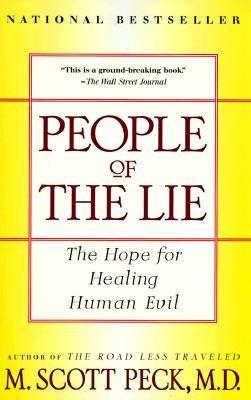
People of the Lie by: Morgan Scott Peck
5 stars
People of the Lie is a psychiatrist's attempt to fuse science and religion by explaining the phenomenon of evil people with psychiatry. In a sentence, it was an interesting read, but I believe he was ultimately wrong.
According to Peck, evil is basically a kind of disease: malignant narcissism. The evil person is one who refuses to submit one's will to a higher power, be it God or some other virtue or discipline. Believing they are right and refusing to accept otherwise, they force others to live according to their worldview. Because they believe they are right, they will lie to themselves and others in order to convince others of their virtue (hence the title of the book, People of the Lie).
While using psychiatry terms to describe evil can be useful, I think that equating evil with narcissism is a mistake. First and foremost, narcissism is sometimes a medical condition, and other times a choice. Evil doesn't work that way. Evil isn't a medical condition that afflicts people. Second, calling evil a disease possibly suggests a genetic element, which is just wrong. The dichotomy of good and evil isn't about one's genetic structure, nor should it be.
As I said before, People of the Lie was an interesting read, but he simply wasn't right. It was fairly well written. I feel that it did dip too far into the occult for a nonfiction book, but only occasionally.